
The 78th Cannes Film Festival took place from 13 to 24 May on the Côte d’Azur. The film festival has evolved not only into a celebration of cinema’s greatness but also an arena for showcasing fashion trends. This year’s festival distinguished itself with bold cinematic choices, as well as colourful clothing choices that reflected the spirit of the time.
L’Officiel Cyprus
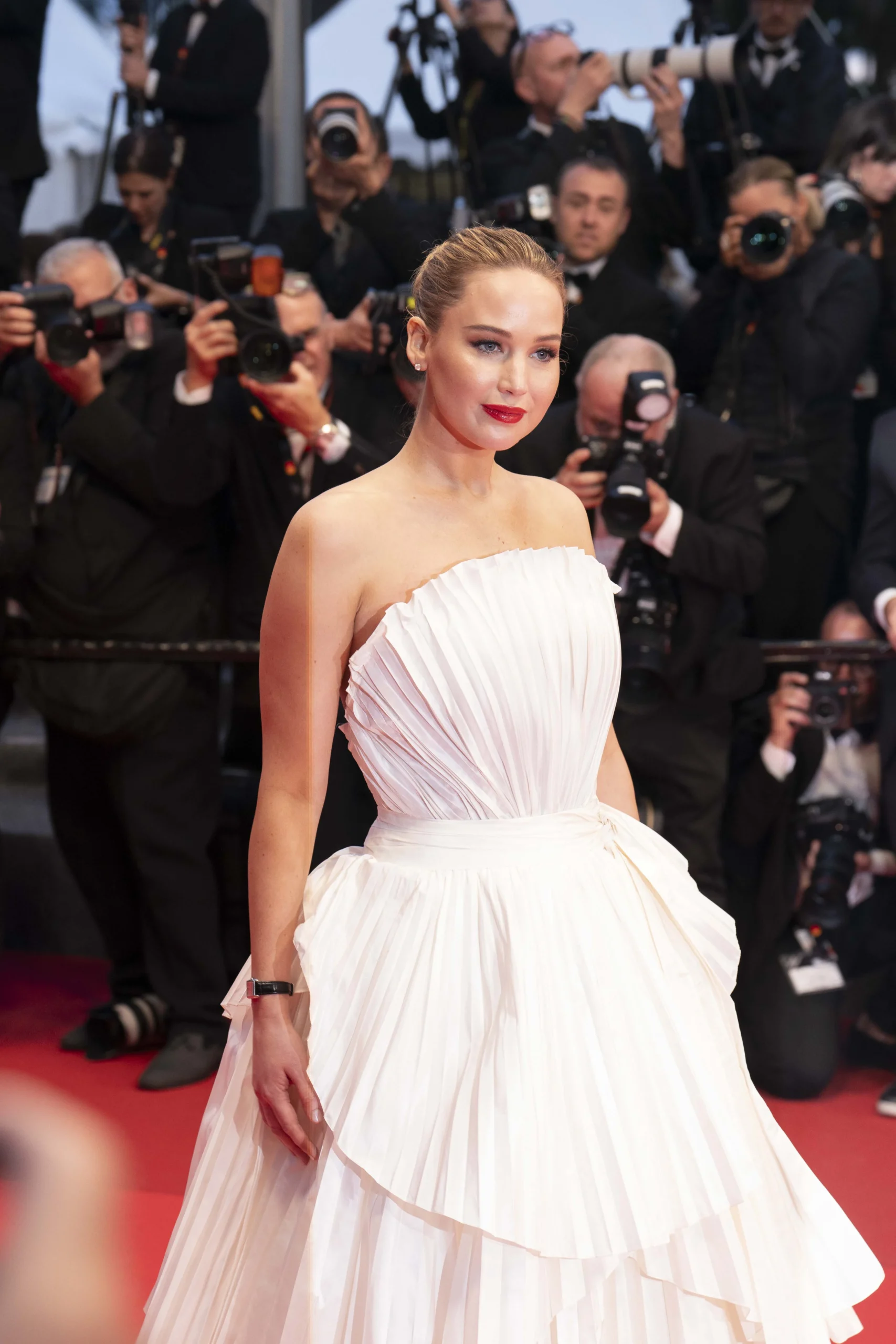
A special innovation this year was a strict restriction on overly revealing outfits: festival organisers officially asked guests to refrain from excessive nudity, deep necklines and provocatively short dresses. This decision was based on the desire to return the festival to an atmosphere of sophistication and respect for cinema and to avoid shifting the focus from art to sensationalism. Also, in light of ongoing discussions about gender objectification in the media, the festival took a step towards promoting a more balanced and elegant image.
Despite this, the celebrities were able to capture the public’s attention with their eccentric and luxurious outfits, and the world’s top directors once again earned the respect and admiration of the audience by arriving at the French resort with their best cinematographic works.
The 78th Festival de Cannes reaffirmed its reputation as a space where auteur cinema is not only alive but also truly relevant. The main award, the Palme d’Or, went to Iranian director Jafar Panahi for It Was Just an Accident. This film, shot under semi-underground conditions, was a political and aesthetic challenge. Through the story of a single accidental crime, Panahi explores the themes of guilt, fear and moral responsibility in a repressive environment. His victory became symbolic – art as an act of resistance.
Norwegian director Joachim Trier made a strong impression on the jury and audience with Sentimental Value, which won the Grand Prix. It is a chamber story about memory, loss and the healing power of intimacy, starring Renate Reinsve and Stellan Skarsgard. The film was critically acclaimed as one of the most human and subtle in recent years, earning a nineteen-minute standing ovation from the audience.
Three awards went to the Brazilian film The Secret Agent by Kleber Mendonça Filho – for Best Director, Best Actor (Wagner Moura) and the FIPRESCI Critics’ Prize. The film is an example of a genre synthesis, blending neo-noir and political thriller elements with a rich visual aesthetic.
The film Sirat, directed by Bolivian director Oliver Laché, was awarded the Jury Prize. It is a dramatic story of growing up and self-determination in the French Muslim community, filmed with rare sympathy and sensitivity. The Best Actress award went to Nadia Melliti for her work in La Petite Dernière, a deeply personal and psychologically complex film about growing up.
Alongside the glitz of the cinema screen, Cannes was once again an arena for fashion statements.
Natalie Portman caused quite a sensation when she appeared in a vintage Dior dress with a black bow adorning the neckline. The dress, inspired by archival sketches of the fashion house from the 1950s, evoked the golden era of glamour. Her image combined sophistication, nostalgia and restrained femininity – as if Portman materialised directly from a frame of old French cinema.
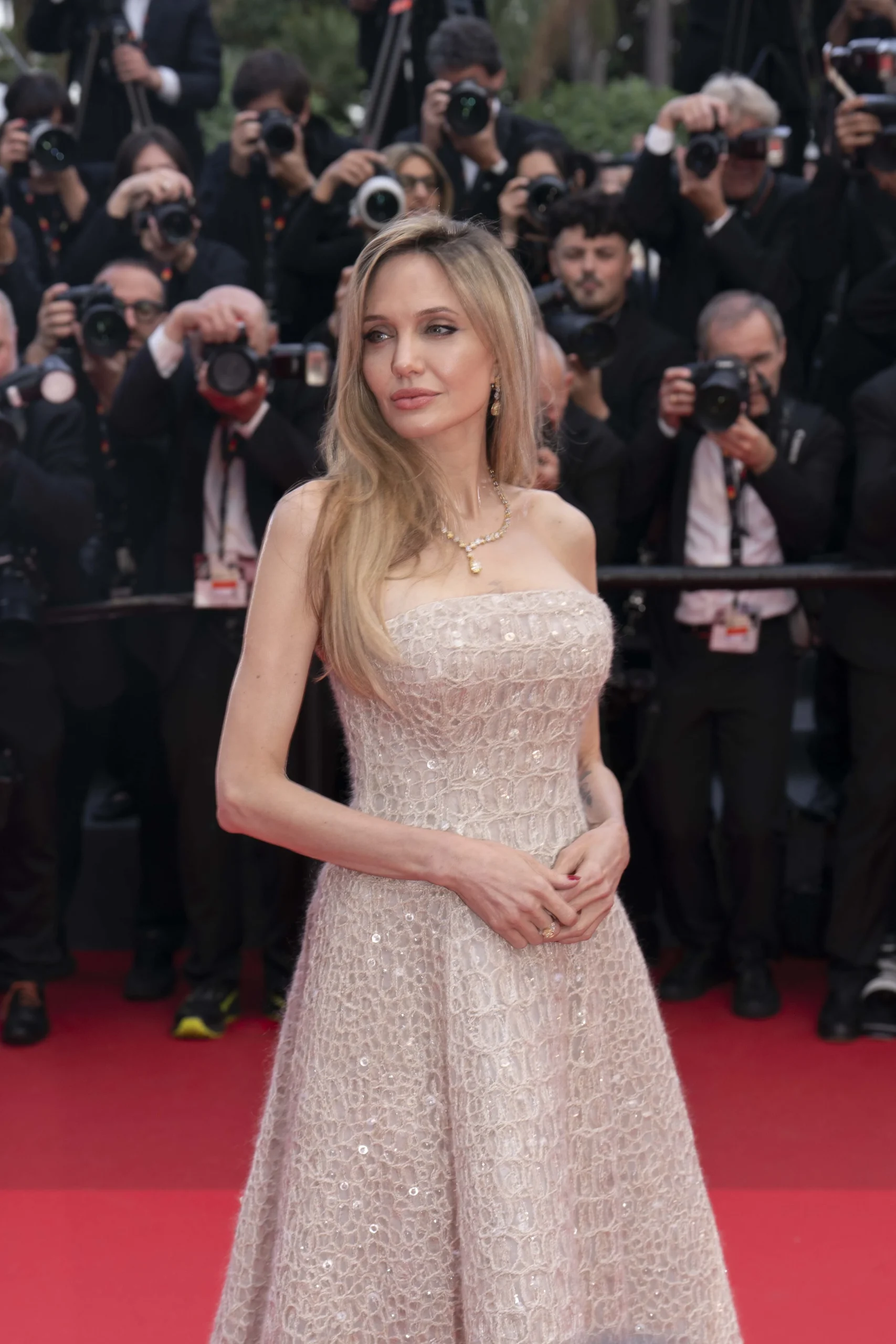
Angelina Jolie, who appears less frequently at social events, had the effect of bringing back a legend. In her case, the choice fell on a minimalist but expressive dress in light colours – flowing, without excessive details, it emphasised the natural grace of the actress. The restrained palette and elegant silhouette became a manifesto of mature style and inner peace, which does not require jewellery.
Emma Stone appeared on the red carpet in an exquisite Louis Vuitton gown. Her dazzling geometric white dress with a crisp collar looked like an ommage to modernism and minimalism at the same time. Emma reaffirmed her status as a fashion icon who is not afraid to experiment with shapes while staying true to subtle elegance.
Elle Fanning was the epitome of sophisticated romance, choosing an exquisite Chanel gown in sky blue colours. The gown with a lush tulle skirt, thin straps decorated with sequins, tulle ruffles on the bodice and shoulders, as well as a black velvet belt at the waist looked like a real work of art. Light layers of fabric and airy drapery added airiness to the image, and delicate make-up completed the picture. Elle resembled a heroine from an old fairy tale, embodying both youth and sophistication.
Cate Blanchett, the muse of Louis Vuitton, once again surprised with her choice: her flowing black dress had a strict style in the front, but turned into a real theatre scene in the back. On the back of the actress was a bulky lace jabot – a dramatic and at the same time refined detail, reminiscent of the fashion of the XVIII century, reinterpreted in the spirit of modernity. This image became a real performance on the red carpet and once again confirmed that Blanchett is not just an actress but an artist in fashion.
Jane Fonda, an indispensable symbol of elegance and social activism, reaffirmed her status as a style icon. On the red carpet, she appeared in a dress consisting of a bodice with a voluminous floral ornament in spectacular 3D optics and a flowing skirt of light chiffon. The intricate decoration and noble simplicity of the silhouette emphasised her confidence, inner strength and impeccable sense of taste. Her appearance was a reminder that true beauty is timeless.
Alba Rohrwacher opted for a sophisticated aesthetic, combining a black top with a pink taffeta bell skirt to create an expressive silhouette with a theatrical note. The contrast of textures and colours, as well as the lack of conventional embellishments, emphasised her individuality. This image established Rohrwacher not only as a talented actress but also as a fashion icon, one who does not follow trends but creates her visual poetics.
Cannes 2025 reminded us that film and fashion are not just industries. They are the languages in which modernity speaks about itself. They are platforms where discussions about freedom, the body, memory, justice and the future are born. And while cinema this year has increasingly turned to themes of inner freedom, identity and political courage, fashion has become a more subtle but no less expressive form of dialogue with the era. Cannes is over, but the conversation started here is just beginning.
Images by Diana Catch